









When battery DIY lovers purchase batteries separately, please be sure to purchase batteries with consistent parameters from the same batch. Consistency requires the model, capacity, internal resistance, initial voltage, and discharge of each battery. Curves, etc., must be consistent.
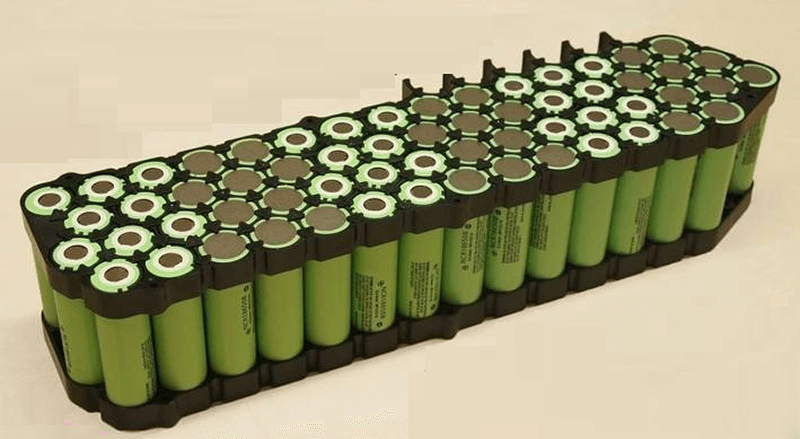
If The Consistency Of The Battery Is Not Good, The Following Problems Will Occur:
1. Inconsistent Voltage:
For example, there are three batteries with voltages of 4V, 3.7V, and 3.3V respectively. When charging, if three batteries are connected in series and charged at the same time, the current will be the same, and the same energy will be obtained at the same time. A 4V battery only needs 4.2V to be fully charged. When fully charged, the protection board will activate the protection mechanism and stop charging. But at this time, the other two batteries are not fully charged yet. The 3.7V battery is only charged to 3.9V, and the 3.3V battery is only charged to 3.5V. They are far from being fully charged, but the indicator light has already reminded them that they are fully charged. This will lead to a phenomenon: you can see that the battery pack is fully charged quickly, but the actual battery pack is not fully charged and runs out of power after a while.
2. Inconsistent Capacity:
For example, there are three batteries with capacities of 1000mAh, 2200mAh, and 2600mAh. When other parameters are consistent, when charging in series: 1000mAh quickly reaches a full state of 4.2V, and a 2200mAh/2600mAh battery The protective board may stop charging when the battery is less than half 3.7V. This will lead to a phenomenon: the battery pack is not fully charged, only one battery is fully charged, and the other two batteries are very low. In addition, if the three batteries are fully charged and are being discharged for work: the 1000mAh battery is quickly placed at low voltage and triggers the protection plate mechanism to stop the discharge output, but the other two batteries may still have half of their power not discharged, so Batteries with small capacity become the bottleneck of the entire battery pack. This will lead to a phenomenon: the battery pack will run out of power quickly after being discharged.
3. Inconsistent Internal Resistance:
it is prone to slow charging and low discharge power. For example, if you carry a slightly larger load, it will heat up and overload protection will appear immediately. The reason is that the internal resistance is relatively large, most of the power is consumed by the internal resistance of the battery itself, and the partial voltage on the output device is small. The equipment cannot be moved or the protection circuit is directly protected. (So, it is not recommended to use cheap batteries or second-hand batteries)
4. Inconsistent Discharge Curves:
individual batteries vary greatly and discharge platforms are inconsistent. A good battery takes a long time to discharge between 3.7 and 3.9V. A bad battery will use 3.5-3.7V as the main discharge platform. The output current of each battery in the series circuit is the same, the voltage is inconsistent, and the output energy is also inconsistent, resulting in capacity The big ones do heavy work, and the small ones do less. Over time, the battery life will be shortened faster.
In short: when the battery pairing is not good, phenomena that often occur include: unstable charging, the charger will sometimes turn on the red light, sometimes turn on the green light, and intermittent charging may easily damage the charger. If you find this phenomenon, please check the battery pairing balance yourself first.